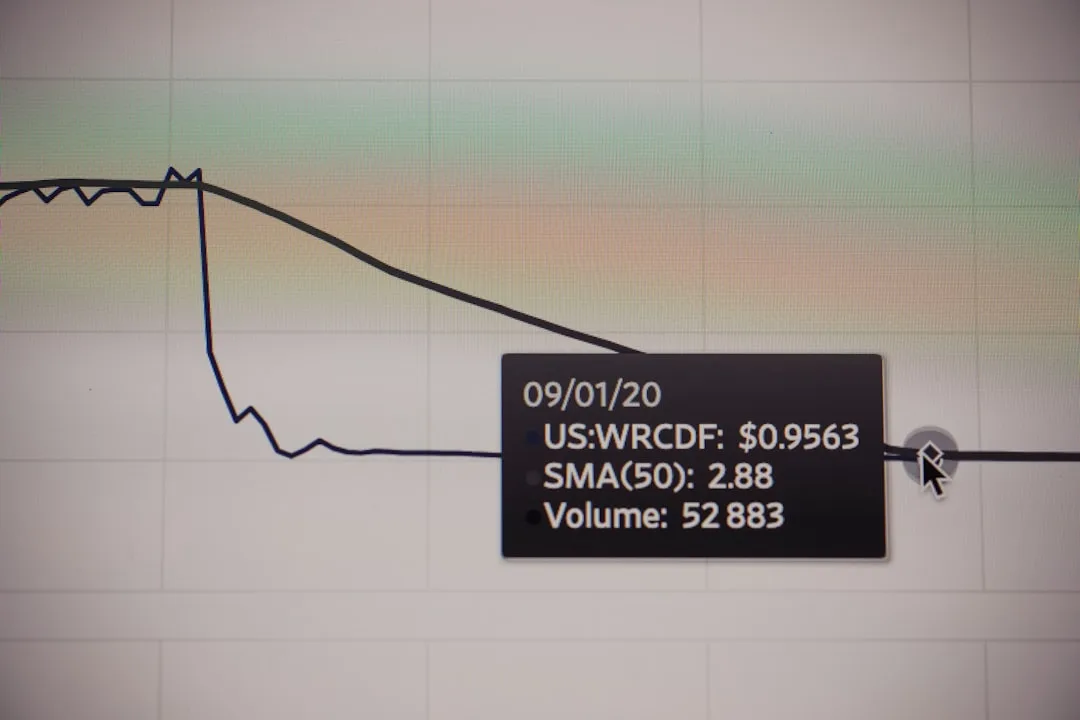

The US stock market experienced a downturn on Tuesday as the Dow Jones Industrial Average and Nasdaq Composite closed lower. Rising energy costs and shifting bond yields pressured major indexes, ending a streak of record highs for several benchmarks.
This volatility comes as oil prices climbed 5% (Los Angeles Times), creating headwinds for transportation and manufacturing sectors. Investors are currently balancing corporate earnings reports against macroeconomic instability and the rising cost of raw materials.
Market analysts noted that the combination of rising oil prices and Treasury yields added significantly to investor jitters throughout the trading session.
The decline in tech shares is particularly telling, as the Nasdaq Composite often reacts sharply to changes in the bond market. When Treasury yields rise, the discount rate used to value future cash flows increases, which often leads to a compression of price-to-earnings multiples for growth-oriented technology companies. This suggests that investors are becoming more sensitive to the cost of capital.
Meanwhile, the specific focus on Berkshire Hathaway and eBay suggests a strategic shift toward value-oriented assets. Berkshire Hathaway, with its massive diversified portfolio, often acts as a hedge during periods of market instability. eBay's performance provides a window into the health of e-commerce and consumer discretionary spending, which are often the first areas to feel the pinch of energy-driven inflation.
The interplay between the Dow and the Nasdaq highlights the divergence between industrial value and technological growth. While the Dow Jones Industrial Average tracks 30 blue-chip companies, the Nasdaq is heavily weighted toward the tech sector, making it more susceptible to the jittery sentiment described by analysts. The current environment reflects a broader struggle to find a sustainable equilibrium between inflation control and economic growth.
Furthermore, the role of Treasury yields cannot be overstated. As the risk-free rate increases, the relative attractiveness of stocks diminishes unless corporate earnings grow fast enough to offset the higher yield. This creates a tug-of-war between strong corporate balance sheets and an increasingly expensive borrowing environment.
Investors are also keeping a close eye on the S&P 500 sector calls, as identified by Yardeni QuickTakes. The divergence between winning and losing sectors provides a roadmap for where capital is flowing—away from speculative growth and toward tangible assets and cash-flow-positive enterprises. This rotation is a classic sign of a maturing market cycle where risk aversion begins to outweigh the fear of missing out.
Looking ahead, the market's direction will likely depend on the Federal Reserve's approach to interest rates and the geopolitical factors influencing crude oil supplies. If oil prices stabilize, the S&P 500 may recover its losses, but persistent yield growth could lead to a more prolonged correction in the tech sector.
Historically, the US stock market maintains a complex relationship with the energy sector. While energy companies may profit from higher oil prices, the broader economy typically suffers due to increased transportation and production costs. The S&P 500, comprising 500 of the largest US publicly traded companies, serves as the definitive gauge for these macroeconomic shifts.
US Stock Market Trends and Energy Volatility
Key questions
- Why did the US stock market decline recently?
- The market slipped due to a 5% increase in oil prices and rising Treasury yields, which created investor uncertainty and pressured technology shares.
- Which companies were highlighted during the market dip?
- Berkshire Hathaway and eBay were key points of focus for investors as they sought stability in value stocks while major indexes trended lower.