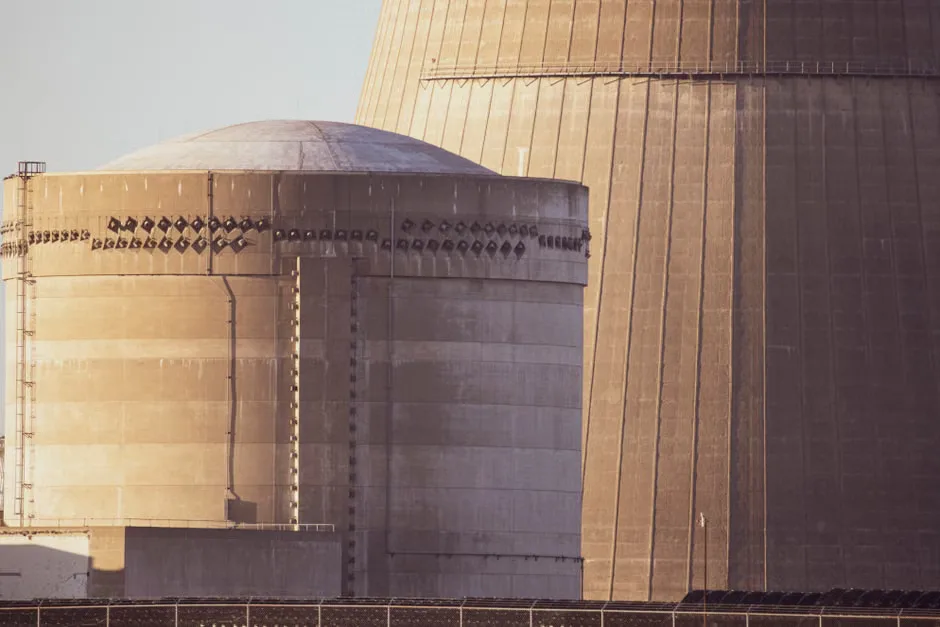
The U.S. Department of Energy has verified that Oklo Inc.’s Aurora small modular reactor reached criticality at the Idaho National Laboratory, marking a significant advancement in next-generation nuclear technology. The achievement occurred during initial testing phases, confirming the reactor’s ability to sustain a controlled nuclear chain reaction.
Oklo’s Aurora design uses high-assay low-enriched uranium and operates on a compact, fast-neutron spectrum, aiming to deliver up to 15 megawatts of electric power. The company states the reactor can operate for decades without refueling, offering a potential solution for remote or off-grid energy needs. This milestone follows similar progress in advanced reactor development across the United States.
‘Reaching criticality is a fundamental step that validates our reactor physics and safety models,’ said Jessica Lovering, director of the Energy for Growth Hub. ‘It demonstrates that innovative nuclear designs can move from concept to tangible performance under regulatory oversight.’
The Aurora project is part of a broader federal initiative to support advanced nuclear technologies through public-private partnerships. Oklo received funding and technical support from the DOE’s Advanced Reactor Demonstration Program, which aims to accelerate deployment of next-generation reactors by the early 2030s. Critics note that regulatory pathways for novel reactor designs remain complex and untested at scale.
Analysts suggest that successful demonstration of criticality could reduce perceived risks for investors and utilities considering small modular reactors. If subsequent testing proceeds smoothly, Oklo plans to pursue a combined license application with the Nuclear Regulatory Commission for future deployment. The company also eyes potential markets in Alaska, rural communities, and industrial sites requiring reliable, low-carbon power.
Beyond electricity generation, proponents highlight the potential of small reactors to provide process heat for industrial applications or support hydrogen production. Oklo’s design emphasizes passive safety features and simplified operations, which could lower long-term operational burdens compared to traditional nuclear plants. The firm continues to refine its licensing strategy while advancing toward commercial viability.
Oklo’s Small Nuclear Reactor Milestone Advances U.S. Clean Energy Goals
The achievement aligns with the Biden administration’s strategy to expand clean energy innovation, including nuclear power as a firm, low-carbon resource. The administration has set a target of achieving a carbon-pollution-free power sector by 2035, with advanced reactors expected to play a role in balancing intermittent renewables. International interest in small modular reactors is growing, particularly in countries seeking to decarbonize heavy industry or replace aging coal plants.
While the Aurora reactor remains in the experimental phase, its progress contributes to a growing body of evidence that advanced nuclear technologies can meet safety, cost, and scalability benchmarks. Observers will watch closely as Oklo moves toward fuel loading, full-power testing, and eventual licensing decisions. Success could pave the way for broader adoption of compact fission systems in diverse energy markets worldwide.
Key questions
- What does it mean for a nuclear reactor to reach criticality?
- Reaching criticality means a nuclear reactor has achieved a self-sustaining nuclear chain reaction, where the number of neutrons produced by fission is sufficient to maintain a continuous reaction. This is a key milestone in reactor startup, indicating the core physics are functioning as designed before progressing to full-power operation.
- How does Oklo’s Aurora reactor differ from traditional nuclear power plants?
- Oklo’s Aurora is a compact fast-neutron reactor using high-assay low-enriched uranium, designed to generate up to 15 megawatts of electricity. Unlike large conventional plants, it aims for decades-long operation without refueling, features passive safety systems, and targets remote or industrial applications rather than grid-scale baseload power.