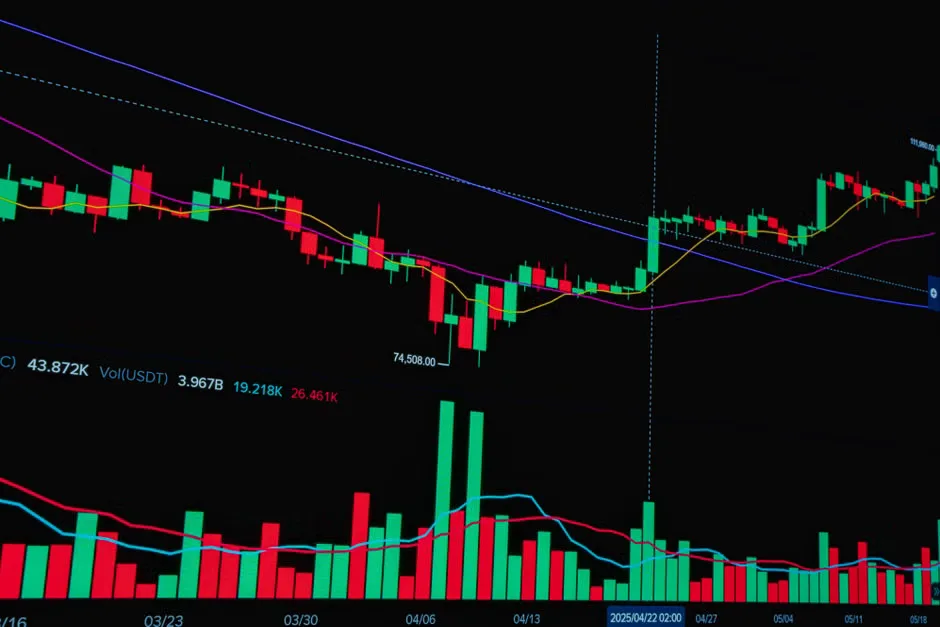
Institutional traders are increasingly shaping Bitcoin’s price discovery process, with over-the-counter (OTC) trading now accounting for 72% of total Bitcoin volume, according to recent market analysis. This shift means that the majority of large Bitcoin transactions occur outside public exchanges, reducing the visibility of order books and trade data available to retail investors.
The rise in OTC activity reflects the growing participation of hedge funds, asset managers, and corporate treasuries in the cryptocurrency market. These entities prefer private trades to avoid market impact and slippage when moving large sums of Bitcoin. As a result, price formation is becoming less transparent and more concentrated among a smaller group of sophisticated players.
‘The migration to OTC desks is a sign of market maturation, but it also means that price signals are increasingly generated in private,’ said Lena Torres, senior analyst at CryptoMarkets Research. ‘When 7 out of 10 Bitcoin trades happen off-exchange, we lose real-time insight into supply and demand dynamics.’
This trend has implications for market efficiency and fairness. Public exchanges rely on transparent pricing to facilitate price discovery, but as OTC volume grows, the reference prices published by exchanges may lag behind actual market conditions. Arbitrage opportunities between OTC and exchange prices can also emerge, potentially benefiting those with access to both venues.
Regulators and market observers are monitoring the shift closely. While OTC trading reduces short-term volatility on exchanges, it may also hinder efforts to prevent market manipulation, as large trades can occur without public scrutiny. Some exchanges are responding by improving their institutional offerings to compete for OTC flow.
Despite the rise in private trading, Bitcoin’s overall market structure remains hybrid, with both exchange and OTC channels playing important roles. Long-term investors continue to use exchanges for liquidity and transparency, while institutions balance discretion with access to deep pools of capital.
Institutional Influence on Bitcoin Price Discovery
As Bitcoin evolves from a retail-driven asset to an institutional-grade instrument, the mechanisms of price discovery are adapting accordingly. The dominance of OTC trading underscores the need for improved data sharing and surveillance tools to maintain market integrity. Future developments may include aggregated OTC reporting or hybrid trading models that combine privacy with transparency.
Key questions
- What does it mean for OTC trading to account for 72% of Bitcoin volume?
- It means that nearly three-quarters of all Bitcoin trades are conducted privately between institutions, rather than on public exchanges. This reduces the transparency of price formation, as these transactions are not reflected in real-time exchange order books or price charts.
- Why do institutional traders prefer OTC desks for Bitcoin transactions?
- Institutional traders use OTC desks to execute large trades without causing significant price movements or slippage on public exchanges. OTC trading allows them to buy or sell substantial amounts of Bitcoin discreetly, minimizing market impact and preserving trading efficiency.