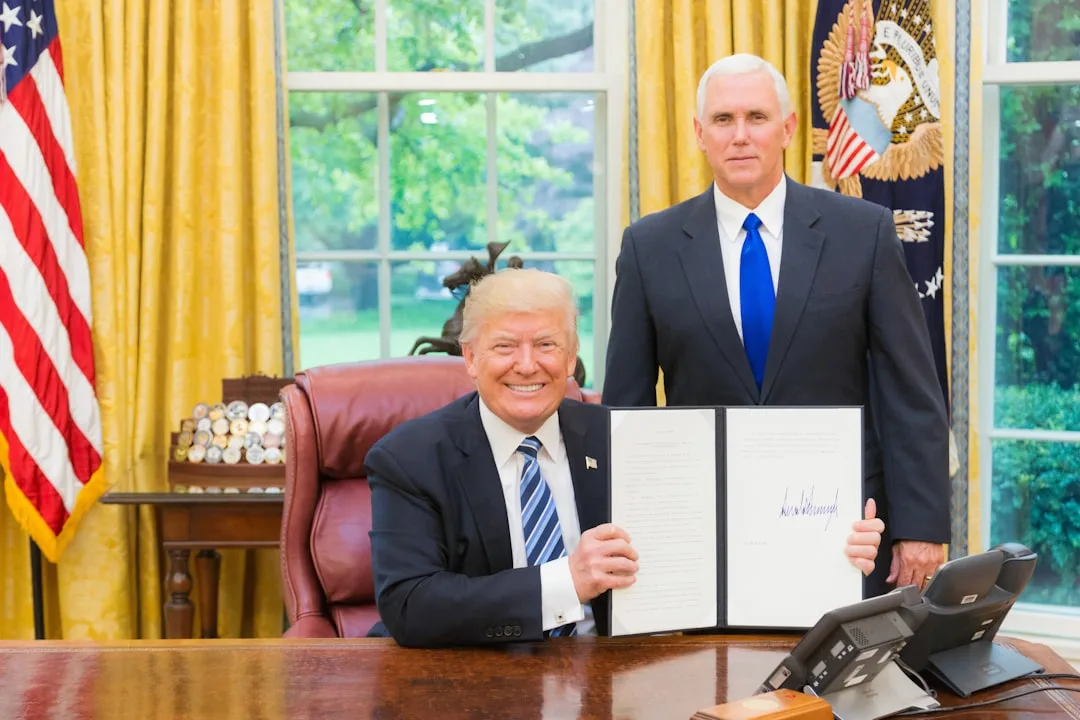
President Donald Trump declined to give Congress what may have been one of its last major public bill-signing ceremonies, according to a report by The Washington Post, a decision that narrowed a traditional opportunity for lawmakers to claim credit for a legislative accomplishment.
Bill signings are often ceremonial as well as constitutional. The president’s signature makes legislation law, but the public event surrounding it can provide lawmakers, Cabinet officials and interest groups with a visual marker of success. Presidents frequently use such appearances to highlight priorities, reward allies and frame a new law for voters.
Trump’s decision to avoid a high-profile ceremony carried political weight because Congress has limited time and a narrow path to pass major legislation before the next phase of the political calendar overtakes its work. For members who helped negotiate or vote for the measure, a White House event would have offered a rare moment of bipartisan or intraparty visibility at a time when much of Washington’s attention is focused on conflict, investigations and campaign positioning.
A ceremony can matter beyond the signature
There is no requirement that a president hold a public signing ceremony. Many bills are signed privately, sometimes with only a brief statement or no public remarks at all. But major ceremonies can become part of the historical record, with pens handed out as keepsakes and lawmakers placed near the president as cameras capture the moment.
For Congress, that image can be valuable. Members often return to their districts and states pointing to legislative wins that delivered funding, changed policy or addressed a national issue. A public signing can help amplify that message and create a clear line between a vote on Capitol Hill and a policy outcome at the White House.
The absence of a ceremony also reflects the central role presidents play in assigning political credit. Even when legislation is shaped by months of committee work and negotiations, the final act belongs to the executive. A president can elevate a bill with a speech and invited guests, or minimize its profile with a quiet signature.
Trump has long favored events that reinforce his own message and brand. In this case, the choice not to stage a major event left lawmakers without the sort of formal conclusion that often accompanies consequential legislation. The decision may also signal that the White House did not view the moment as useful to its broader political narrative.
The episode highlights a recurring tension between Congress and the presidency: Lawmakers write and pass bills, but presidents often control the public presentation of those achievements once the legislation reaches the Oval Office. As the congressional session moves toward its next deadlines, the missed ceremony may stand as a reminder that legislative victories in Washington are not measured only by votes, but also by who gets to be seen celebrating them.
Key questions
- Does a president have to hold a public bill-signing ceremony?
- No. A president only needs to sign the legislation for it to become law. Public ceremonies are optional and are often used to highlight political priorities or give credit to supporters.
- Why do bill-signing ceremonies matter to members of Congress?
- They give lawmakers a visible way to show constituents that their votes and negotiations led to a policy result, often creating images and statements used in public messaging.