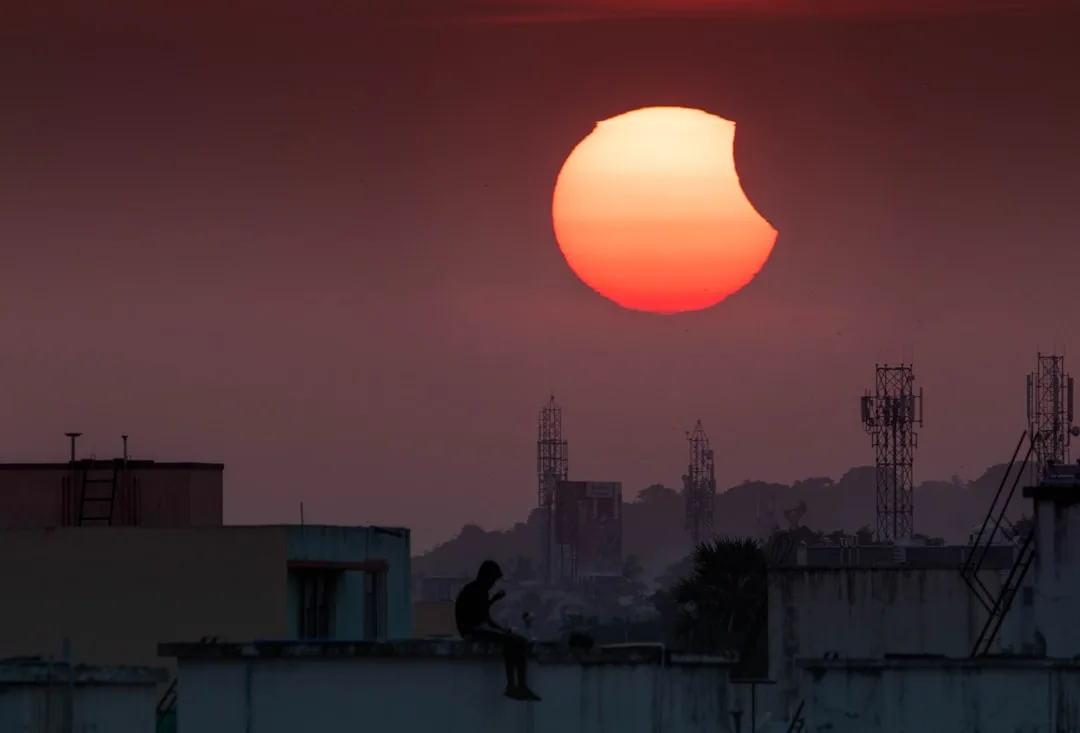
As anticipation builds for the upcoming total solar eclipse, scientists are turning their attention to a elusive atmospheric effect known as shadow bands. These faint, rapidly moving ripples of light and dark appear on light-colored surfaces just seconds before and after totality, when the sun is reduced to a thin crescent.
The phenomenon occurs due to turbulence in Earth's upper atmosphere, which acts like a lens that refracts and focuses the narrow solar crescent. Similar to how starlight twinkles, the shifting air cells create alternating bright and dark bands that sweep across the ground at speeds of several meters per second. First documented in the 19th century, shadow bands remain difficult to predict or observe consistently.
We see shadow bands as a natural interferometer for studying atmospheric structure, said Dr. Angela Des Jardins, director of the Montana Space Grant Consortium. Their motion and intensity can tell us about wind speeds and temperature gradients in the stratosphere.
Researchers have deployed high-speed cameras, spectrometers, and ground-based sensors along eclipse paths to capture the bands in detail. During the 2017 Great American Eclipse, teams recorded shadow bands using polarized light filters to distinguish them from ordinary shadows. Data showed band spacing correlated with atmospheric turbulence scales, validating models of refractive effects.
Despite advances, forecasting shadow band visibility remains challenging because it depends on localized atmospheric conditions that vary even over small distances. Clear skies and stable air masses increase the likelihood of observation, while humidity or cloud cover can obscure them entirely. Scientists emphasize that successful sightings require both optimal weather and precise timing.
Beyond their scientific value, shadow bands contribute to the awe-inspiring experience of a total solar eclipse. Their fleeting, almost supernatural appearance has inspired myths and artistic interpretations across cultures. Modern observers often describe them as resembling rippling water or dancing shadows, adding to the emotional impact of totality.
Understanding Atmospheric Optics Through Eclipse Phenomena
Studying shadow bands helps refine models of how light propagates through turbulent media, with applications in astronomy, remote sensing, and climate science. The same principles that cause these bands also affect laser communications and astronomical imaging. By improving atmospheric correction techniques, scientists can enhance the clarity of ground-based telescopes and satellite observations.
As eclipse-chasers prepare for the next opportunity to witness totality, the pursuit of shadow bands reminds us that even brief celestial events can yield lasting scientific insights. Whether seen or not, the search for these elusive ripples continues to deepen our understanding of the dynamic atmosphere we live beneath.
Key questions