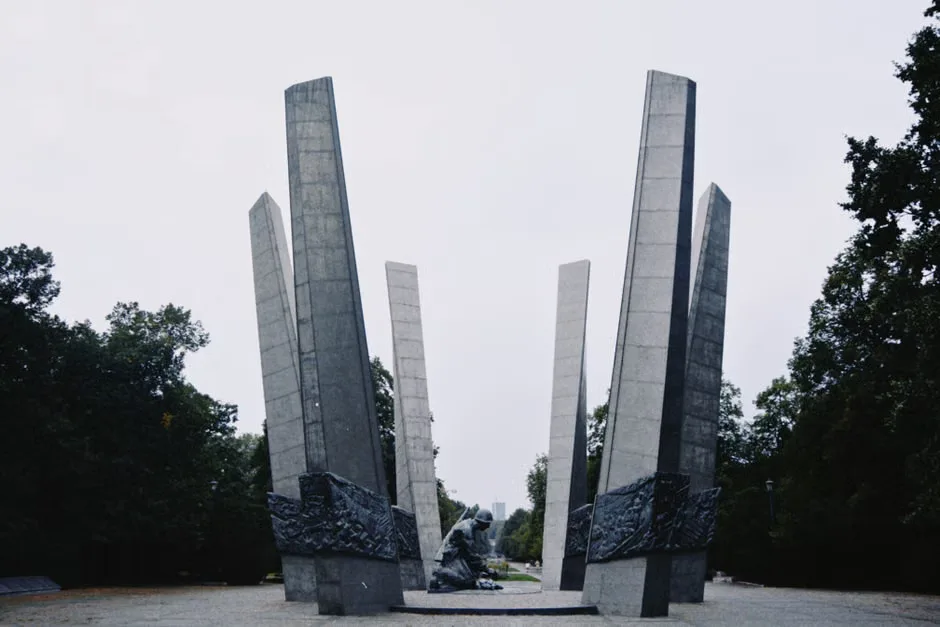
Polish Prime Minister Donald Tusk has pledged to build a memorial for victims of World War II killings that Warsaw describes as genocide committed by Ukrainian nationalists, reviving one of the most sensitive historical issues between Poland and Ukraine.
Tusk’s remarks pointed to the enduring political weight of the massacres of Polish civilians in Volhynia and Eastern Galicia, regions that were part of wartime Poland and are now largely in Ukraine. Polish officials and historians say tens of thousands of civilians, many of them women and children, were killed in 1943 and 1944 by members of the Ukrainian Insurgent Army and associated nationalist groups. Ukraine has often framed the period within a broader conflict that also involved retaliatory killings and overlapping occupations by Nazi Germany and the Soviet Union.
The Polish government has long sought greater recognition of the killings, as well as permission for exhumations and proper burials. Kyiv has at times resisted Polish demands, arguing that the subject should be handled carefully by historians and not used to undermine Ukraine’s struggle for independence or its current defense against Russia.
A painful dispute between allies
The issue has complicated relations between two countries that have otherwise become close partners since Russia’s full-scale invasion of Ukraine in 2022. Poland has been one of Ukraine’s strongest supporters in Europe, sending military aid, accepting millions of refugees and pressing allies to maintain pressure on Moscow.
But historical memory has remained a recurring source of tension. In Poland, the killings are widely known as the Volhynia massacre and are commemorated as an act of genocide. In Ukraine, nationalist figures associated with the wartime struggle against Soviet rule are honored by some as independence fighters, a position that is viewed in Poland as deeply painful and politically unacceptable.
Tusk said a national memorial would serve as a place of remembrance for the victims and their families. He also indicated that honoring the dead should not weaken Poland’s support for Ukraine in the face of Russian aggression. Polish leaders have repeatedly said that truth about the past and security cooperation in the present must be pursued at the same time.
The language surrounding the events remains contentious. Poland’s parliament has previously classified the massacres as genocide, while Ukraine has been more cautious about accepting that legal and historical characterization. The dispute has often intensified around anniversaries, public commemorations and decisions about monuments or gravesites.
Calls for exhumations and reconciliation
Families of victims and Polish civic groups have urged successive governments to secure access to burial sites in Ukraine. Exhumations are seen by many in Poland as essential to identifying victims and providing religious or state burials. Ukrainian officials have signaled some willingness to discuss the matter, though progress has been slow and politically delicate.
The proposed memorial is likely to be watched closely in both capitals. For Warsaw, it may answer domestic demands for a visible national tribute. For Kyiv, it could raise concerns about whether historical grievances will become more prominent as Ukraine seeks continued backing from its neighbors and eventual integration with European institutions.
Despite the tension, officials in both countries have generally emphasized the need to avoid allowing Moscow to exploit the dispute. Russia has frequently used contested historical narratives in attempts to divide Ukraine from its European supporters. Polish and Ukrainian leaders have said reconciliation requires acknowledgment of victims while maintaining unity against present-day threats.
Key questions
- What memorial did Poland’s prime minister pledge?
- Donald Tusk pledged a memorial to civilians killed during World War II in massacres that Poland attributes to Ukrainian nationalist forces.
- Why is the issue sensitive for Poland and Ukraine?
- Poland regards the killings as genocide against Polish civilians, while Ukraine’s historical memory of wartime nationalist movements is more contested, making the issue difficult even as both countries cooperate closely against Russia.