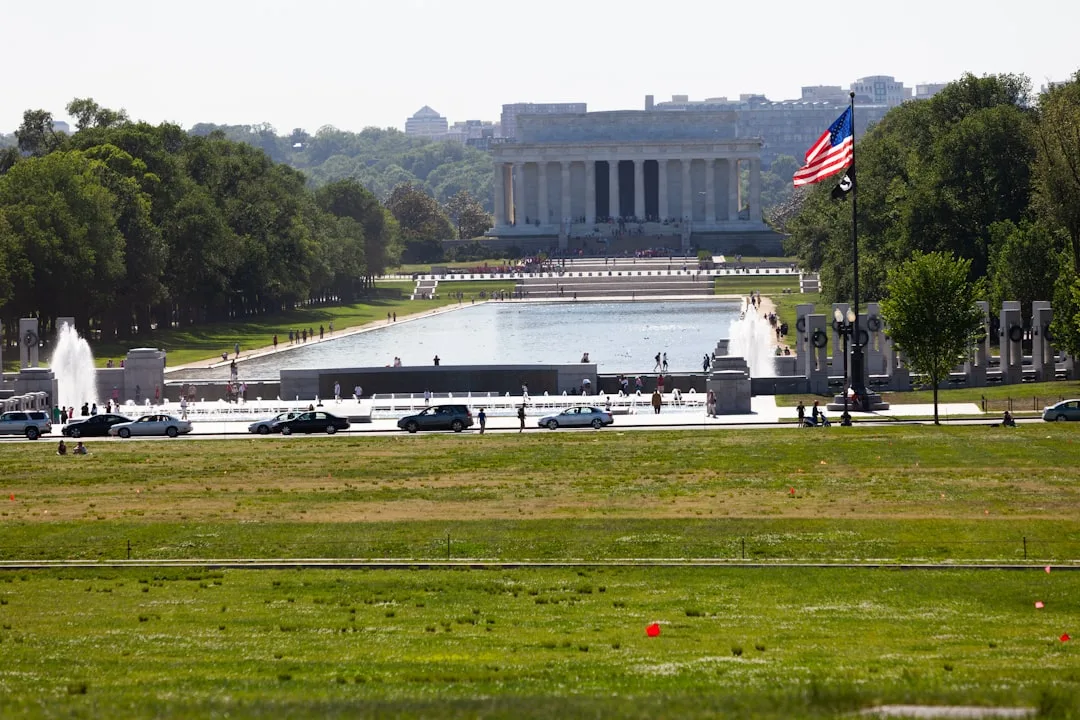
WASHINGTON — A former U.S. Olympic canoeist has pleaded not guilty to charges that he deliberately damaged the lining of the Lincoln Memorial Reflecting Pool, a prominent feature of the National Mall that recently underwent refurbishment.
The athlete denied accusations that he intentionally harmed the pool’s protective lining, according to the charge described in the case. The plea means the case will continue through the courts, where prosecutors will be required to prove the allegations beyond a reasonable doubt.
The Reflecting Pool, which stretches between the Lincoln Memorial and the World War II Memorial, is one of the most photographed public spaces in Washington. It is maintained as part of the National Mall, an area that draws millions of visitors each year and is closely tied to the nation’s political and civil rights history.
The pool’s lining is an important part of its renovation system, helping preserve the structure, manage water retention and reduce maintenance problems. Damage to that kind of infrastructure can be costly and disruptive, particularly at a site that is expected to remain open and accessible to tourists, local residents and public events.
Case centers on alleged damage to renovated landmark
Authorities have accused the former Olympian of vandalism linked to the refurbished pool. The defense, by entering a not guilty plea, has formally disputed the accusation and preserved the right to challenge the evidence in court.
No conviction has been entered, and the plea is not a determination of whether the alleged damage occurred or who caused it. A not guilty plea is a standard step in criminal proceedings that allows both sides to prepare for possible hearings, motions or trial.
The case has drawn attention because of the unusual intersection of an Olympic athlete and one of the country’s most recognizable memorial landscapes. Olympic canoeing is a niche sport in the United States, and former competitors often remain known within relatively small athletic communities long after their appearances on the international stage.
Vandalism cases involving federal landmarks or national park properties can carry added scrutiny because they involve public resources and preservation concerns. The Lincoln Memorial area is managed with strict rules intended to protect monuments, water features, walkways and historic sightlines that are used for ceremonies, demonstrations and daily visits.
Reflecting Pool remains a symbol of the capital
The Lincoln Memorial Reflecting Pool has served as a backdrop to some of the country’s most significant public gatherings, including civil rights demonstrations and presidential inaugural events. Its long, shallow surface mirrors the memorial and the Washington Monument, creating one of the capital’s defining views.
Officials have not announced any immediate broad closure tied to the case. Any repairs or assessments would typically be handled by agencies responsible for National Mall maintenance and preservation.
The next steps in the case will depend on the court schedule and any filings from prosecutors or the defense. For now, the central issue remains whether the government can support its claim that the damage was intentional and connected to the former Olympian.
Key questions
- What is the former Olympian accused of?
- He is accused of deliberately damaging the refurbished lining of the Lincoln Memorial Reflecting Pool in Washington.
- What does a not guilty plea mean in this case?
- A not guilty plea means the defendant denies the charge and the case may proceed through further court hearings or trial.