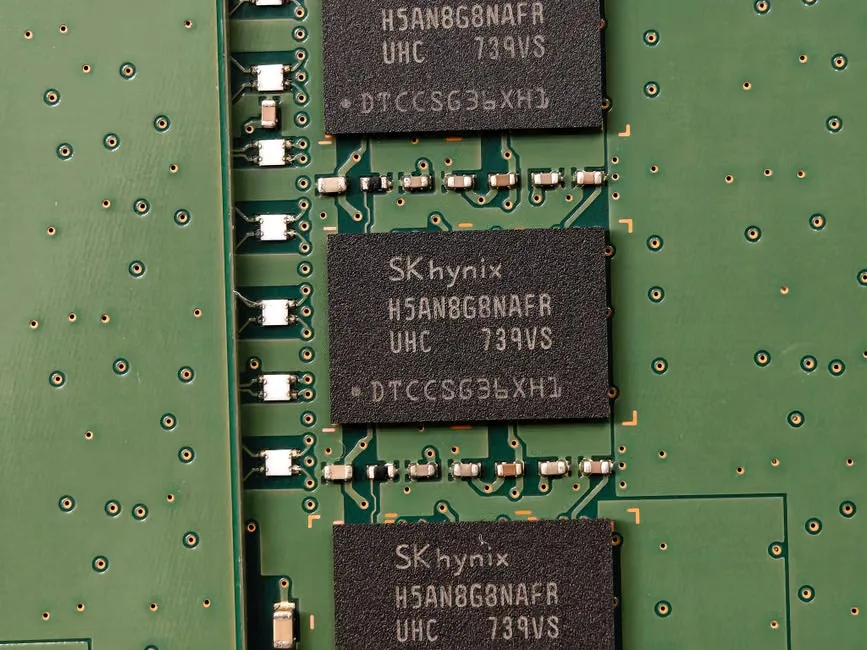
SK Hynix, one of the world’s largest memory chip makers, made a strong entrance into U.S. trading, drawing fresh attention to the surge in demand for advanced semiconductors used in artificial intelligence systems.
The South Korean company’s U.S.-listed shares opened at $170 on Nasdaq and rose sharply in early trading, according to reports from major financial outlets. The debut gives U.S. investors another way to buy into a company that has become central to the global race to supply high-performance memory for AI data centers.
SK Hynix has been among the biggest beneficiaries of the boom in high-bandwidth memory, or HBM, a specialized type of chip used alongside advanced processors to train and run AI models. Demand for those components has climbed as cloud providers, chip designers and large technology companies expand computing capacity.
Why investors are watching SK Hynix
The U.S. debut comes as memory chip makers recover from a steep downturn that followed the pandemic-era electronics surge. Prices for some memory products weakened in 2022 and 2023 as customers worked through excess inventories. But the market has shifted quickly as AI-related demand tightened supply for the most advanced products.
SK Hynix has emerged as a key supplier in that recovery, particularly in HBM, where production is difficult and capacity is limited. Investors have rewarded companies that can demonstrate a clear link to AI infrastructure spending, and SK Hynix’s performance in Seoul had already reflected that enthusiasm before its U.S. trading began.
The new U.S. listing also arrives at a time when American investors are looking beyond well-known processor makers for exposure to the semiconductor supply chain. Memory chips are less visible to many consumers than graphics processors, but they are critical to the performance of AI servers. Faster memory helps move data more efficiently, a major constraint in large-scale computing systems.
What the debut means for the chip cycle
The initial jump in SK Hynix shares suggests investors see the memory upswing as more than a short-term rebound. Still, the sector remains cyclical. Memory producers must balance aggressive investment in new capacity with the risk that supply growth eventually catches up with demand.
Analysts and traders are likely to watch SK Hynix for signals on HBM pricing, production yields and customer commitments. They also will track broader demand for traditional DRAM and NAND memory, which are used in smartphones, personal computers, servers and storage devices. A durable recovery across those categories would strengthen the case for a wider memory chip boom.
For U.S. markets, SK Hynix’s debut adds another high-profile semiconductor name at a moment when chip stocks continue to influence major indexes. The move does not change the company’s core business, but it broadens access for investors who may have been limited by overseas trading rules or currency considerations.
The early rally reflects optimism, but future gains will likely depend on whether AI spending keeps expanding and whether SK Hynix can maintain its position in high-end memory. For now, its U.S. arrival underscores how central memory chips have become to the next phase of the technology investment cycle.
Key questions
- Why did SK Hynix draw attention in U.S. trading?
- SK Hynix drew attention because its U.S. debut gave investors more direct exposure to a major supplier of advanced memory chips used in artificial intelligence data centers.
- What is high-bandwidth memory?
- High-bandwidth memory, or HBM, is a type of advanced memory chip designed to move large amounts of data quickly, making it important for AI processors and high-performance computing systems.