
John Constable’s “The Hay Wain,” one of the best-known images in British art, has arrived in Suffolk for the first time, despite depicting a scene rooted in the county’s rural landscape.
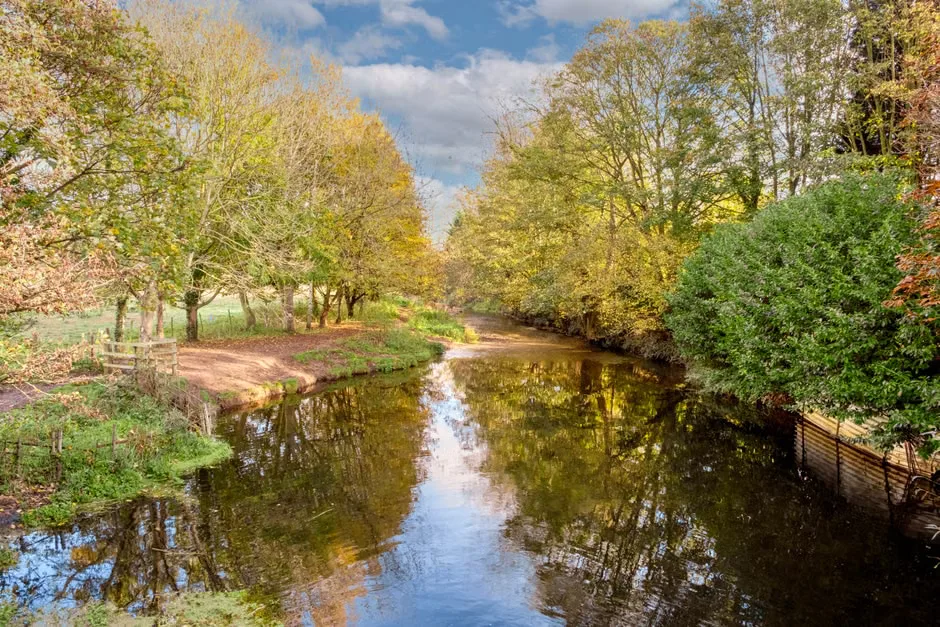
The painting, completed in 1821, shows a horse-drawn wagon crossing shallow water near Flatford, an area closely associated with Constable’s childhood and artistic identity. The scene lies on the River Stour, along the border between Suffolk and Essex, and has become one of the defining views of the English countryside.
Its arrival in Suffolk marks a notable cultural moment for local audiences and for admirers of Constable, who was born in East Bergholt in 1776. Although the work has been widely reproduced and studied for generations, it has not previously been displayed in the county whose landscape helped shape it.
A homecoming for a national image
“The Hay Wain” is usually associated with the National Gallery in London, where it is among the institution’s most recognizable works. Its temporary display in Suffolk gives visitors a chance to see the painting closer to the places that inspired it, including Flatford Mill and the surrounding Stour Valley.
The painting’s reputation rests partly on its calm, pastoral detail: the cottage at the riverbank, the clouds above the water, the working animals and the cart that gives the picture its name. Yet its importance also comes from the way Constable elevated familiar rural scenes into major works of art at a time when landscape painting was still fighting for critical status.
For Suffolk, the display carries a strong sense of place. Constable repeatedly returned to the mills, fields and waterways of his youth in his work, drawing on memories of a landscape shaped by farming, trade and family business. The area now promoted as “Constable Country” draws visitors who want to compare the paintings with the real locations that inspired them.
Seeing the original work in Suffolk also changes the context for audiences. Rather than viewing the painting only as a national masterpiece, visitors can consider it as a local image, tied to specific communities and histories along the River Stour.
Why the painting still matters
“The Hay Wain” was not an immediate commercial success in Britain, but it gained admiration abroad and helped strengthen Constable’s international reputation. Over time, it became a fixture of British visual culture, appearing in textbooks, galleries, posters and public surveys of favorite artworks.
Its popularity has sometimes made it seem familiar to the point of invisibility. The Suffolk display offers a chance to look again at the painting’s technique, including Constable’s treatment of light, weather and moving water. It also invites renewed attention to the working landscape behind the picturesque image.
For museums and cultural organizations, the loan underscores the value of placing major artworks in regional settings where their stories began. For Suffolk residents, it is an opportunity to encounter a famous painting not as a distant national treasure, but as part of the county’s own cultural inheritance.
Key questions
- What is ‘The Hay Wain’?
- ‘The Hay Wain’ is an 1821 landscape painting by John Constable showing a horse-drawn wagon in the River Stour near Flatford, an area closely associated with Suffolk.
- Why is its Suffolk display significant?
- The painting is famous for depicting a Suffolk-linked landscape, but this is the first time it has been displayed in the county itself.